
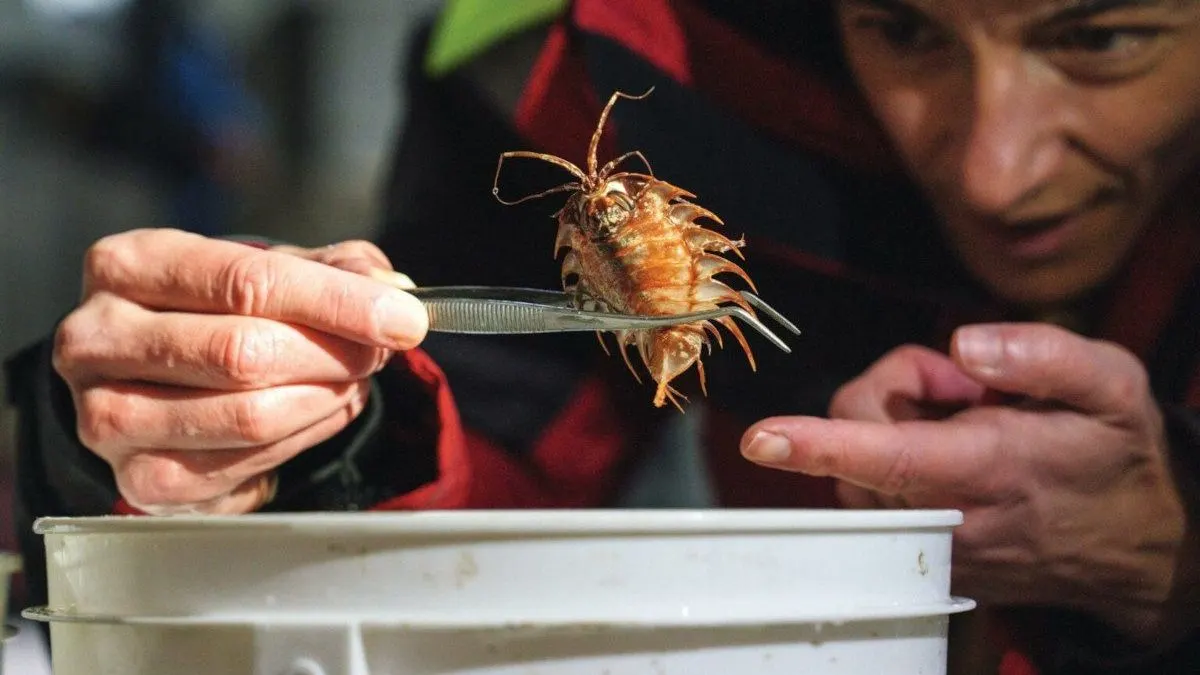
SCIENCE — Good news, for once. It's just also weird as hell. BBC Science Focus reports the story under the headline “Scientists Poked Under Antarctica's Ice and Found Alien-Looking Life That Hasn't Seen the Sun in Thousands of Years.”
What's been reported
BBC Science Focus Magazine reports that when a huge chunk of the George VI Ice Shelf broke away in January 2025, scientists got a rare look at seabed that had been hidden under about 150 meters of ice. Remotely operated vehicles found sponges, sea spiders, anemones and octopuses: a surprisingly rich ecosystem cut off from sunlight.
Deeper inland, researchers are tapping freshwater lakes sandwiched between the ice sheet and bedrock. Montana State University ecologist John Priscu, who led two missions that sampled them, says they recovered microbes and genetically identified them: “We found life.” Many of these lakes have been sealed off from the air and oceans for thousands of years, some possibly for millions, and the magazine says more than 700 are thought to exist, only a tiny fraction of them sampled.
“You can only speculate what might be down there,” Priscu says. The piece is a feature, not a single new study, so go read the full thing for the science.
Read the original
This is a GNN summary, not a reprint. For the full reporting, go to the source: BBC Science Focus: Scientists Poked Under Antarctica's Ice and Found Alien-Looking Life That Hasn't Seen the Sun in Thousands of Years.
Spotted an error? GNN corrects in public — see our corrections page.